


Pracownie naukowe
Pracownia Replikacji DNA i Stabilności Genomu
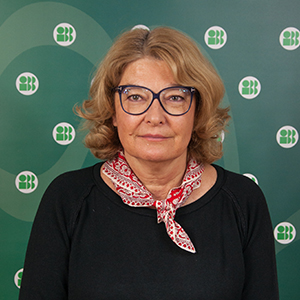
Prof. dr hab. Iwona FijałkowskaZakres badań
Our laboratory seeks to identify mechanisms and factors that ensure genome stability in bacteria, yeast, and mammalian cells. Within the scope of our interest are: (I) factors contributing to the fidelity of DNA replication and its coordination with the cell cycle, with emphasis on non-catalytic subunits of the replisome; (II) regulation of DNA damage tolerance pathways via translesion synthesis (TLS), with a special focus on TLS DNA polymerases in yeast and mammalian cells; (III) processes involved in maintaining the stability of mitochondrial DNA.
Badania
Najważniejsze osiągnięcia badawcze
- We demonstrated that in Saccharomyces cerevisiae, CMGE (DNA helicase-polymerase) dysfunctions result in genomic instability, i.e. mutator phenotypes, defects in cell cycle progression, an increase in the participation of low-fidelity DNA Polζ, more frequent homologous recombination events, an increase in the instability of repeat tracts, and affect the division of labor, providing circumstances under which DNA polymerase epsilon (Pol ε) is partially replaced on the leading strand by Pol δ.
- We performed a multi-omics analysis of expression of the POLE2 non-catalytic subunit of DNA polymerase epsilon (Polε), showing its upregulation across multiple cancer types, what associates with decreased overall survival in a cancer-type-specific manner and modified transcriptional regulation involving E2F, EZH2, and RB.
- We have shown that during normal Escherichia coli replication, the fidelity of the lagging DNA strand is higher than that of the leading strand. We proposed that increased polymerase dissociation from terminal mismatches (i.e., potential mutations) is an important fidelity factor that can promote mismatch removal. The contribution of low-fidelity DNA polymerases may change this bias. Additionally, our results show that the primary Ribonucleotide Excision Repair (RER) pathway dependent on RNase HII is more specific to the leading DNA strand, while RNase HI plays a bigger role in the lagging-strand RER. This bias is preserved during both normal replication and trans-lesion synthesis.
- We discovered that DNA polymerase ι (Pol ι), a highly mutagenic human translesion DNA polymerase, is acetylated by the p300/CBP acetyltransferases, and that inhibition of these enzymes induces Pol ι polyubiquitination and destabilization. We further identified the E3 ubiquitin ligase RNF2 as a regulator of Pol ι. Both p300/CBP and RNF2 interact with Pol ι and modulate its cellular abundance, revealing a potential mechanism by which acetylation and ubiquitination regulate the stability of this error-prone enzyme.
- We found that yeast PCNA, a key protein in DNA replication and repair within the nucleus, is localized to mitochondria and, upon genotoxic stress, can be involved in mitochondrial DNA translesion synthesis.
Opis badań
Mechanisms that maintain high-fidelity DNA duplication and repair are critical to handle the malfunction of replication forks and DNA damage. Mutations are essential factors in long-term processes of evolution or the generation of antibody diversity, but in the short term they are deleterious and may cause human disease.
- Escherichia coli research
By measuring the level of mutagenesis that occurs on leading and lagging DNA strands, we studied the involvement of particular DNA polymerases in the replication of both DNA strands and the mechanism of DNA polymerase switching1,2. In collaboration with R. Schaaper (NIEHS), we demonstrated that the accuracy of DNA replication is higher on the lagging strand3. This effect results from the more dissociative character of the lagging strand replication, which provides options for the activation of additional mutation-prevention pathways. Our conclusion is supported by results of antimutator polymerases that were characterized by an increase in dissociation rates4.
The E. coli SOS system is well-established as a model of the cellular response to DNA damage. In collaboration with R. Schaaper’s laboratory, we investigated the possible interplay between SOS and cellular dNTP pools. We found that alterations of the dNTP pool that were caused by deficiencies in the nucleoside diphosphate kinase and dCTP deaminase had a suppressive effect on constitutive SOS expression. We proposed a model of how alterations of the dNTP pool may interfere with the mechanism of SOS induction.
According to recent in vitro studies, DNA polymerases misincorporate rNTPs into DNA at a rate of 1 per 103 bp. Hence, ribonucleotides, which are more abundant in cells than dNTPs, vastly outnumber any other type of DNA damage or source of mutations. In collaboration with R. Woodgate (NIH), using steric gate mutants of DNA polymerases, we found that ribonucleotide incorporation and the efficiency of their subsequent removal were not equal on both DNA strands.
- Bacteriophage RB69 research
The high fidelity of replication depends on polymerase nucleotide selectivity and the associated proof-reading activity of 3’-5’ exonuclease. To understand the molecular basis of base discrimination that is exhibited by replicative DNA polymerases, we studied DNA polymerase from bacteriophage RB69. RB69 polymerase, together with major eukaryotic DNA polymerases, belong to the B family. We conducted structure-function fidelity studies that allowed us to identify important residues that contribute to the high fidelity of this enzyme (Y567, S565)5, and we proposed that remote, non-catalytic residues may be critical for maintaining an optimal active site conformation (D714)6. We are also investigating interactions between the polymerase and primase from the T4 replisome.
- Saccharomyces cerevisiae research
Studies of mutations of genes that encode replication complex proteins are important for understanding origins of human diseases. Replisome components are highly conserved in all eukaryotes. Therefore, yeast cells serve as an excellent model system to study their mutual functional dependencies. The central role in the replisome is played by the Cdc45-Mcm2-7-GINS (CMG) helicase complex, which also coordinates the assembly and function of replisome components. CMG associates with and stimulates the activity of DNA polymerase ε (Polε), forming the CMGE complex.
In our investigations, mutated variants of Polε or GINS of the CMGE complex impair genetic stability. We observed mutator phenotypes, defects in cell cycle progression, an increase in the participation of low-fidelity DNA Polζ, more frequent homologous recombination events, and an increase in the instability of repeat tracts7-10. Moreover, impaired functioning of the GINS complex provides circumstances under which DNA polymerase epsilon (Pol ε) is partially replaced by Pol δ on the leading strand11,12. We proposed that the defective function of CMGE impairs the progression of DNA replication, leading to a greater contribution of recombination-based repair mechanisms. These findings corroborate recent reports that defects in CMGE promote the development of certain human diseases.
To preserve genome integrity upon DNA replication perturbation, cell cycle checkpoint activation slows DNA synthesis, delays cell division, and activates a specific transcriptional program. Our studies of a mutant of the Dpb2 non-catalytic subunit of Polε demonstrated the involvement of Polε in sensing the proper progression of DNA replication on the leading DNA strand and activation of the transcriptional response to checkpoint activation8,13. This supports the model of parallel activation of the DNA replication checkpoint from the two DNA strands, in which Polε is involved in checkpoint activation from the leading strand.
- Bibliography
- Fijalkowska IJ. et al. FEMS Microbiol Rev. 2012 doi: 10.1111/j.1574-6976.2012.00338.x
- Maliszewska-Tkaczyk M. et al. Proc Natl Acad Sci U S A. 2000 doi: 10.1073/pnas.220424697
- Fijalkowska IJ. et al.Proc Natl Acad Sci U S A. 1998 doi: 10.1073/pnas.95.17.10020
- Makiela-Dzbenska K. et al. DNA Repair (Amst). 2019 doi: 10.1016/j.dnarep.2019.102643
- Trzemecka A. et al. J Mol Biol. 2010. doi: 10.1016/j.jmb.2010.09.058
- Jacewicz A. et al. PLoS One. 2013. doi: 10.1371/journal.pone.0076700
- Garbacz M. et al. DNA Repair (Amst). 2015 doi: 10.1016/j.dnarep.2015.02.007
- Dmowski M. et al. PLoS Genet. 2017 doi: 10.1371/journal.pgen.1006572
- Jedrychowska M. et al. PLoS Genet. 2019. doi: 10.1371/journal.pgen.1008494
- Denkiewicz-Kruk M. et al. Int J Mol Sci. 2020. doi:10.3390/ijms21249484
- Dmowski M. et al. DNA Repair (Amst). 2022. doi:0.1016/j.dib.2022.108223
- Dmowski M. et al. Data in Brief. 2022 doi:0.1016/j.dib.2022.108223
- Dmowski M. et al. Curr Genet. 2017 doi: 10.1007/s00294-017-0706-7
Metodologia
- Bacterial and yeast chromosomal system for measuring the fidelity of leading and lagging DNA strand replication and participation of specific DNA polymerases in replication.
- Systems for measuring the instability of repeat tracts and recombination rates.
- In vitro DNA replication fidelity assay.
- Cell cycle analysis using flow cytometry
- Mammalian HPRT mutation assay;
- Real-time quantitative PCR (RT-qPCR) analysis
- In vitro acetylation and ubiquitination assays
Wybrane publikacje
- Krasilia A., Chaudhry D., Fijałkowska I.J., Dmowski M., Pan-cancer multi-omics analysis reveals upregulation of the POLE2 subunit of DNA polymerase epsilon and its associations with patient survival and cellular pathways beyond DNA replication. NAR Genomics and Bioinformatics (2026) 8(4): lqag118 (27 p.) doi.org/10.1093/nargab/lqag118
- Yazıcı E., McIntyre J. The complex network of p300/CBP regulation: Interactions, posttranslational modifications, and therapeutic implications. J Biol Chem. 2025. doi:10.1016/j.jbc.2025.110715
- Fedorowicz M, Halas A, Macias M, Sledziewska-Gojska E, Woodgate R, McIntyre J. E3 ubiquitin ligase RNF2 protects polymerase ι from destabilization. Biochimica et Biophysica Acta (BBA)-Molecular Cell Research 2024. doi:10.1016/j.bbamcr.2024.119743
- Latoszek M, Baginska-Drabiuk K, Sledziewska-Gojska E, Kaniak-Golik A. PCNA and Rnh1 independently participate in the protection of mitochondrial genome against UV-induced mutagenesis in yeast cells. Sci Rep 2024. doi: 10.1038/s41598-024-82104-4.
- Łazowski K., Faraz M., Vaisman A., Ashton N.W., Jonczyk P., Fijałkowska I.J., Clausen A.R., Woodgate R., Makieła-Dzbeńska K., Strand specificity of ribonucleotide excision repair in Escherichia coli. Nucleic Acids Research (2023) 51(4): 1766-1782 doi.org/10.1093/nar/gkad038
Współpraca
- Rosa Barrio and James D. Sutherland, Ubiquitin-likes and Development Lab, CIC bioGUNE, Spain, https://www.cicbiogune.es/people/rbarrio
- Damian Gaweł and Marlena Godlewska, Centre of Postgraduate Medical Education, Warsaw, Poland https://www.cmkp.edu.pl/ksztalcenie/szkola-nauk-medycznych/zaklad-biologii-komorki-i-immunologii/department-of-cell-biology-and-immunology-2
- Izabela Kern-Zdanowicz, IBB PAS, Poland
- Matylda Macias, Microscopy and Cytometry Facility, International Institute of Molecular and Cell Biology, https://mcf.iimcb.gov.pl/about-us/team/matylda-macias/
- Etienne Schwob, Division of DNA Replication, Genome Instability & Cell Identity, Institute of Molecular Genetics, France, https://www.igmm.cnrs.fr/en/team/replication-et-instabilite-genomique/
- Paweł Siedlecki, IBB PAS, Poland
- Adrianna Skoneczna, IBB PAS, Poland
- Roger Woodgate, Section on DNA Replication, Repair, and Mutagenesis, National Institute of Health, USA, https://www.nichd.nih.gov/research/atNICHD/Investigators/woodgate
Nagrody i wyróżnienia
- Łazowski K., Woodgate R., Fijałkowska I.J. - Prize for the best review paper published at IBB in 2024
- Łazowski K., Faraz M., Vaisman A., Ashton N.W., Jonczyk P., Fijalkowska I.J., Clausen A.R., Woodgate R., Makiela-Dzbenska K. - Prize for the best scientific paper published at IBB in 2023
- McIntyre J. - Prize for the best review paper published at IBB in 2020.
- Jędrychowska M., Denkiewicz-Kruk M. Alabrudziśka M., Skoneczna A., Jonczyk P., Dmowski M., Fijalkowska I.J. - Prize for the best scientific paper published at IBB in 2019
Publikacje (z afiliacją IBB PAN)
Kierownik
Information on education, academic degrees/titles and employment
Current position:
Professor,
Head of the Laboratory of DNA Replication and Genome Stability IBB PAS
Specialization: molecular biology, genetics, microbiology
Education, academic degrees, titles:
2006 – Professorship
1999 – Habilitation (Doctor habilitatus)
1989 – Ph.D in Biological Sciences, Institute of Biochemistry and Biophysics of the Polish Academy of Sciences, Warsaw
1979 – M.Sc. in Microbiology, University of Warsaw, Warsaw, Poland
Brief chronology of employment:
1995 – present – Institute of Biochemistry and Biophysics Polish Academy of Sciences, Warsaw, Poland
1993 – 1994 – Research associate, National Institute of Environmental Health Sciences, Research Triangle Park, North Carolina, USA
1989 – 1993 – Research fellow, National Institute of Environmental Health Sciences, Research Triangle Park, North Carolina, USA
1988 – 1992 – Research scientist, Institute of Biochemistry and Biophysics Polish Academy of Sciences, Warsaw, Poland
1984 – 1988 – PhD student, Institute of Biochemistry and Biophysics Polish Academy of Sciences, Warsaw, Poland
1981 – 1983 – Research fellow, Institute of Biochemistry and Biophysics Polish Academy of Sciences, Warsaw, Poland
1979 – 1981 – Research scientist, Department of Immunology, Institute of Tuberculosis and Pulmonary Diseases, Warsaw, Poland
Research stays abroad
1996 – 2020 – several short-term stays at National Institute of Environmental Health Sciences, Research Triangle Park, North Carolina, USA
1993 – 1994 – Research associate, National Institute of Environmental Health Sciences, Research Triangle Park, North Carolina, USA
1989 – 1993 – Research fellow, National Institute of Environmental Health Sciences, Research Triangle Park, North Carolina, USA
Other key information impacting the evaluation of the academic and research career
59 publications, number of citations 1,717 (without self-citations) H-Index 24
- Promoter of 12 doctoral students
- member of the Scientific Council of the Institute of Biochemistry and Biophysics of the Polish Academy of Sciences since 2000
- member of Warsaw Scientific Society;
- member of Polish Academy of Sciences; Divisions of Polish Academy of Sciences; Division II Biological and Agricultural Sciences; Committee on Molecular Biology of the Cell since 2020;
- organizer of 7th DNA polymerases Meeting (more than 100 scientists from 22 countries) 2024, Warsaw. Poland
PI of research projects:
1. Contribution of DNA polymerase delta in the leading strand replication in Saccharomyces cerevisiae cells NCN 2015/17/B/NZ1/00850, 2015-2021
2. New players involved in the maintenance of genomic stability. FNP TEAM/2011-8/1, 2012 – 2016
3. Studies of Nucleic Acids and Proteins – from Basic to Applied Research” International PhD Projects Program of the Foundation for Polish Science and European Union Regional Development Fund MPD/2009-3/2, 2011 – 2015
4. Analysis of the fidelity of DNA synthesis of Pol epsilon in vitro – impact of noncatalytic Dpb2p subunit Ministry of Science and Higher Education N N301 333439, 2010 – 2014
5. Contribution of DNA polymerase I to DNA replication fidelity: spectrum of mutagenesis Ministry of Science and Higher Education N N301 030034, 2008-2010
6. Involvement of DNA polymerase I in E. coli chromosome replication. Ministry of Science and Higher Education 2 PO4A 06130, 2006 – 2009
7. Fogarty International Research Collaboration Award USA: “Fidelity of replication in Saccharomyces cerevisiae”. 2005 – 2008
8. Physiological role of the Dpb2 DNA subunit of Saccharomyces cerevisiae epsilon polymerase”. Ministry of Science and Higher Education 2 PO4A 051 26, 2004 – 2007
9. Dissociation of DNA polymerase III holoenzyme as a mechanism to enable DNA polymerase exchange during Escherichia coli chromosome replication. Ministry of Science and Higher Education, 2 PO4A 023 029, 2005 –2007
10. Involvement of DNA polymerases in determining the fidelity of Escherichia coli chromosome replication, Polish Scientific Research Committee. 3 PO4A 042 23, 2002-2005
11. Mutagenesis on the leading and lagging DNA strands, Maria Sklodowska-Curie Joint Polish-US Grant, 1996 – 1999
12. Fidelity of the leading and lagging DNA strands during E. coli chromosome synthesis, Polish Scientific Research Committee, 6PO4A04309, 1995-1998
Zespół
- Iwona Fijałkowska, Prof., Kierownik Pracowni, ORCID: 0000-0002-5307-4332
- Michał Dmowski, PhD, Pracownik, ORCID: 0000-0002-6571-6259
- Agnieszka Hałas, PhD, Pracownik, ORCID: 0000-0001-6487-0759
- Aneta Kaniak-Golik, PhD, DSc, Pracownik, ORCID: 0000-0003-4027-6282
- Karolina Makieła-Dzbeńska, PhD, Pracownik, ORCID: 0000-0002-1224-7444
- Justyna McIntyre, PhD, DSc, Pracownik, ORCID: 0000-0002-0382-4799
- Ewa Śledziewska-Gójska, Prof., Pracownik, ORCID: 0000-0001-8409-0864
- Deepali Chaudhry, Doktorant, ORCID: 0000-0002-7733-4370
- Maria Furman, Doktorant, ORCID: 0009-0009-1263-5576
- Bilal Seh, Doktorant, ORCID: 0009-0009-4196-3018
- Shadi Setayeshi, Doktorant, ORCID: 0000-0003-3658-7694
Granty
- Mechanisms of regulation and functional role of acetylation in human DNA polymerase iota. Justyna McIntyre. OPUS, National Science Center, 2026-2030
- Mechanisms regulating the cellular level of the most mutagenic human DNA polymerase - the role of p300 acetyltransferase and hypoxia. Justyna McIntyre. OPUS, National Science Center, 2021-2027