

Pracownie naukowe
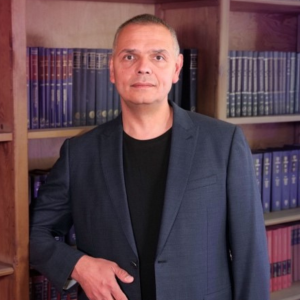
Prof. dr hab. Robert Bialik
Pracownia Teledetekcji i Modelowania Procesów ŚrodowiskowychZakres badań
The laboratory focuses on high-resolution environmental monitoring and modelling based on drone-acquired data, with particular emphasis on polar and coastal systems. Current research is centered on large-scale image processing, 3D reconstruction and machine learning-based analysis of environmental datasets. Activities are conducted within international research projects, including USNEA (NCN OPUS) and APSO (Antarctica Project Supported by ORLEN) targeting biodiversity assessment, habitat mapping and environmental change detection.
Badania
Najważniejsze osiągnięcia badawcze
- Direct contribution to updates of ASPA 128, ASPA 151 and ASMA 1 management plans within the Antarctic Treaty System.
- Identification and scientific basis for reinstatement of Cape Melville as an Important Bird and Biodiversity Area (BirdLife International).
- Development of machine learning methods for automated wildlife monitoring in Antarctica.
- Creation and publication of long-term environmental datasets used in international environmental management.
Opis badań
The laboratory provides advanced analytical services in high-resolution environmental data processing, with a primary focus on drone-based (RPAS/UAV) datasets, particularly in polar regions.
Current work is centered on processing and analysis of large-scale image datasets, often consisting of thousands of high-resolution images. This enables detailed photogrammetric reconstruction, including 3D modelling and orthomosaic generation.
Research is conducted within large interdisciplinary projects focused on Antarctic ecosystems and coastal environments. The laboratory develops scalable and reproducible workflows for data processing, including automated detection, feature extraction and classification using machine learning methods. These approaches support biodiversity monitoring, habitat mapping and the analysis of environmental change in sensitive ecosystems.
A key strength of the laboratory is the ability to translate raw environmental data into quantitative products supporting scientific analysis and environmental management, including applications in protected area planning (ASPA/ASMA).
In parallel, the laboratory conducts ecological research on Antarctic seabirds, particularly Antarctic shags. This includes long-term ringing programmes and the deployment of biologging devices to investigate movement patterns, foraging behaviour and habitat use. These data complement environmental analyses derived from remote sensing.
The laboratory also provides analytical support to research teams and institutions requiring advanced processing of large environmental datasets.
Metodologia
Research is based on high-resolution data acquisition using RPAS/UAV systems combined with advanced computational processing.
The workflow includes photogrammetric reconstruction (structure-from-motion), orthomosaic generation and 3D modelling based on large image datasets. Data analysis is supported by machine learning methods, including deep neural networks, for automated detection and classification of environmental features.
Processing pipelines are optimized for large datasets and implemented using dedicated software alongside custom Python-based workflows.
Biological data acquisition includes seabird ringing and deployment of biologging devices, allowing integration of behavioural and movement data with spatial environmental datasets.
The methodology emphasizes scalability, reproducibility and integration of data products into scientific and applied environmental contexts.
Wybrane publikacje
- Fudala, K., & Bialik, R.J. (2022). The use of drone-based aerial photogrammetry in population monitoring of Southern Giant Petrels in ASMA 1, King George Island, maritime Antarctica. Global Ecology and Conservation, 33.
- Wójcik-Długoborska, K.A., Osińska, M., & Bialik, R.J. (2022). The impact of glacial suspension color on the relationship between its properties and marine water spectral reflectance. IEEE Journal of Selected Topics in Applied Earth Observations and Remote Sensing, 15, 3258–3268.
- Osińska, M., Wójcik-Długoborska, K.A., & Bialik, R.J. (2023). Annual hydrographic variability in Antarctic coastal waters infused with glacial inflow. Earth System Science Data, 15(2), 607–616.
- Cusick, A., Fudala, K., et al., & Bialik, R.J. (2024). Using machine learning to count Antarctic shag (Leucocarbo bransfieldensis) nests on images captured by remotely piloted aircraft systems. Ecological Informatics, 82.
- Fudala, K., & Bialik, R.J. (2025). RPAS-derived orthomosaic dataset of Southern Elephant Seal breeding colonies on King George Island (2019–2024). Scientific Data, 12(1).
Współpraca
- Leon A. Bravo, Universidad de La Frontera, Temuco, Chile
- Anna Panasiuk, University of Gdańsk, Gdańsk, Poland
- Żaneta Polkowska, Gdańsk University of Technology, Gdańsk, Poland
- Joanna Potapowicz, University of Gdańsk, Gdańsk, Poland
- Dominika Saniewska, University of Gdańsk, Gdańsk, Poland
- Michał Saniewski, Institute of Meteorology and Water Management, Gdynia, Poland
- Thomas Schmid, CIEMAT, Madrid, Spain
- Maria Osińska, Institute of Oceanology, Polish Academy of Sciences, Sopot, Poland
- Amy Zanne, Cary Institute of Ecosystem Studies, Millbrook, USA
Publikacje (z afiliacją IBB PAN)
Zespół
- Robert Bialik, Prof., Kierownik Pracowni, ORCID: 0000-0002-0254-6352
- Katarzyna Fudala, PhD, Pracownik, ORCID: 0000-0001-9698-2480
- Paweł Karaś, Pracownik, ORCID: 0009-0003-8472-5841
- Kornelia Wójcik-Długoborska, Pracownik, ORCID: 0000-0002-1868-424X
- Olaf Zdziebko, Doktorant, ORCID: 0009-0002-2161-2121
Granty
- Antarctic Project Supported by ORLEN (APSO). Robert Bialik. ORLEN and ORLEN Foundation, 2025-2028.
- Unmanned Aerial Vehicles (UAV) and satellites synergy for monitoring of Antarctic lichen communities (USNEA). Robert Bialik. OPUS, National Science Center, 2025-2029.
- King George Island Lakes: Physicochemistry of waters and carbon content in sediments. Kornelia Anna Wójcik-Długoborska. MINIATURA, National Science Center, 2024-2025.