Extracellular vesicles as an organismal response to signals derived from pathogens
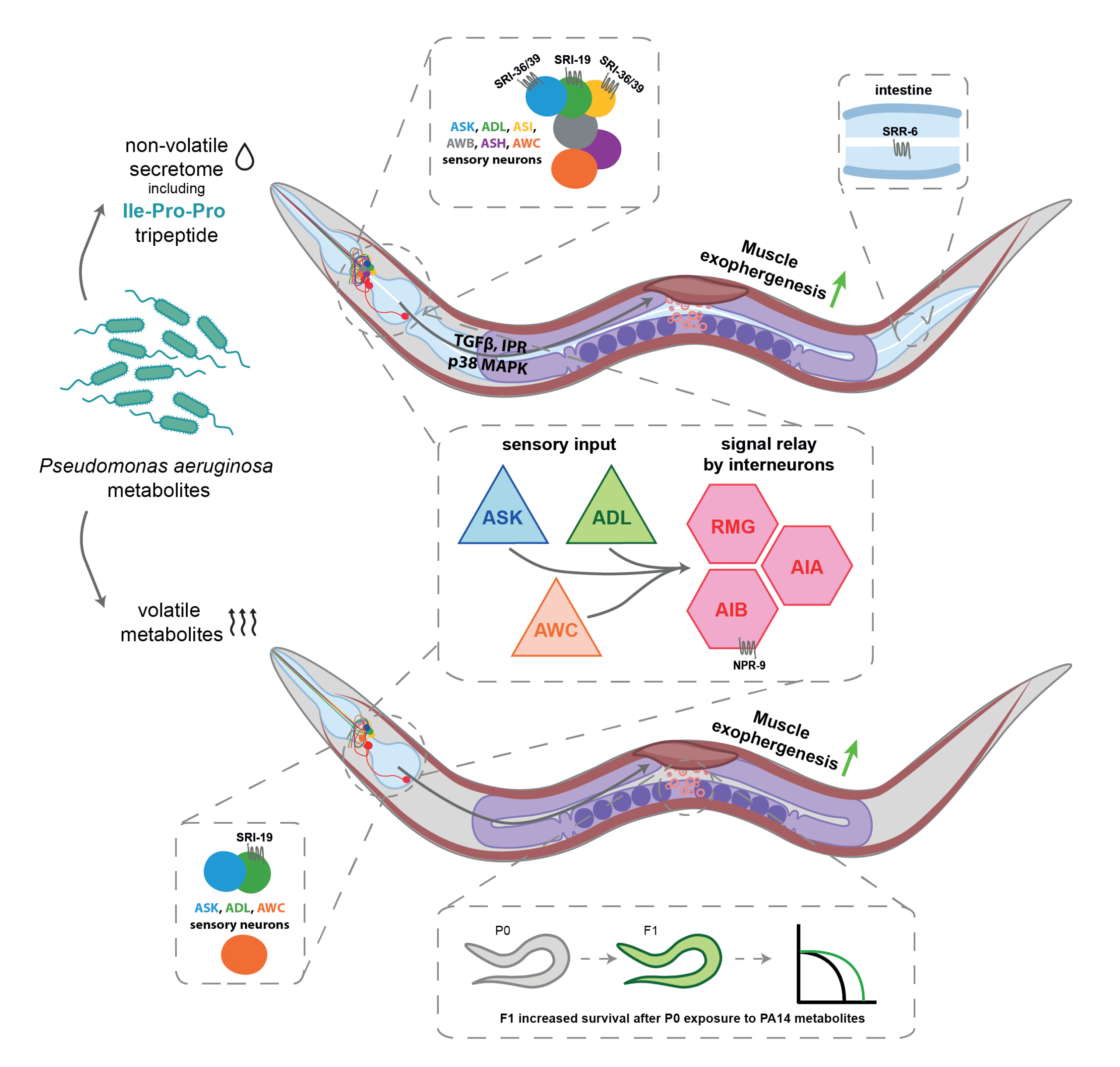
Research on early organismal responses to pathogen-derived signals shows that defensive mechanisms can be activated before an actual infection occurs. A research team from IBB PAS, led by Michał Turek from the Laboratory of Animal Molecular Physiology, published an article in Nature Communications analyzing this phenomenon. The results of the study, which uses Caenorhabditis elegans as the model organism, indicate that chemical compounds produced by bacteria influence the formation of extracellular vesicles. These structures play a key role in intercellular communication and are an important element of the immune response.
The article shows that the detection of pathogenic signals occurs through specialized sensory and neural pathways, and that the initial recognition of threat can lead to an intensification of processes that prepare the host organism for potential infection. Importantly, the results also point to possible benefits for future generations, highlighting the evolutionary significance of the mechanisms described.
The full text entitled “Volatile and non-volatile pathogen cues shape host extracellular vesicles production in pre-infection response” is available here: https://www.nature.com/articles/s41467-025-67789-z.
The authors from the Institute of Biochemistry and Biophysics PAS are: Klaudia Kołodziejska, Agata Szczepańska, Satya Vadlamani, Ramakrishnan Ponath Sukumaran, Mariusz Radkiewicz, and Michał Turek. The research was funded by the National Science Centre and has been carried out in collaboration with scientists from the International Institute of Molecular and Cell Biology (Warsaw, Poland), Centre d’Immunologie de Marseille-Luminy (France) and Technische Universität Dresden (Germany).